









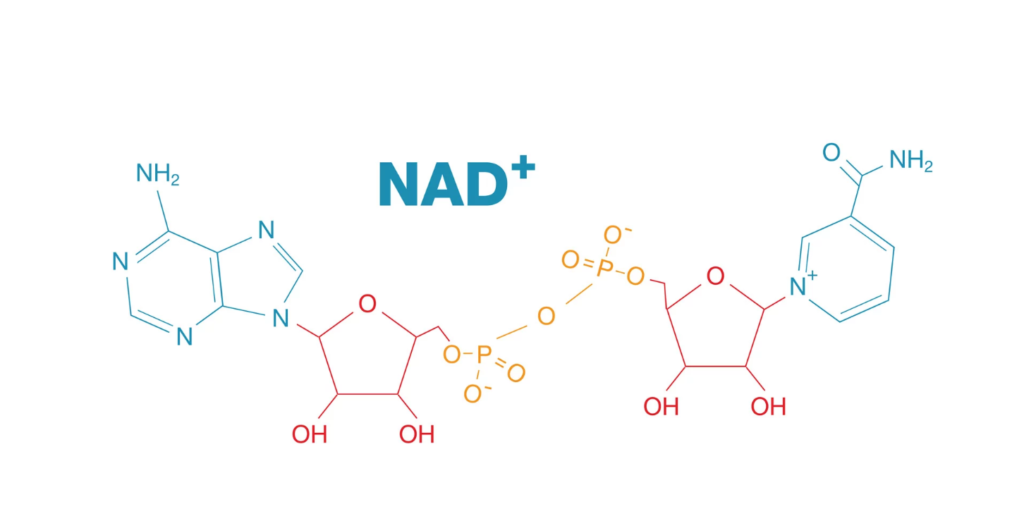
When people hear the word energy, they usually think about feeling active or tired. In scientific research, however, energy has a very specific meaning. It refers to how cells carry out chemical reactions that keep biological systems working.
One molecule that researchers often study in this context is NAD+. While the name sounds technical, its role in research can be explained very simply.
So, What Exactly Is NAD+?
NAD+ (short for nicotinamide adenine dinucleotide) is a molecule that exists naturally inside cells. In laboratory research, it is studied because it helps scientists understand how cells manage energy at a molecular level.
Rather than being “energy” itself, NAD+ works more like a helper molecule. It assists chemical reactions by transferring electrons between molecules. This makes it an important focus in cellular and biochemical research models.
Why Do Scientists Study NAD+?
Researchers study NAD+ to better understand:
- How cells process energy
- How metabolic reactions are organised
- How electron transfer works in biochemical systems
- How cells maintain balance during chemical reactions
Because NAD+ is involved in many energy-related reactions, it appears frequently in laboratory studies focused on metabolism and cellular function.
How Is NAD+ Studied in Research Labs?
NAD+ is examined in controlled laboratory environments, not in humans or animals. Scientists use techniques such as:
- In-vitro biochemical assays
- Analytical testing like HPLC
- Purity verification using Certificates of Analysis (COA)
These methods allow researchers to observe how NAD+ behaves under defined conditions and how it interacts with other molecules in experimental systems.
NAD+ and Cellular Energy – A Simple Way to Think About It
A simple way to understand NAD+ is to think of it as a carrier. During research experiments, NAD+ helps move electrons from one reaction to another, allowing energy-related processes to continue smoothly.
Without molecules like NAD+, many biochemical reactions studied in labs would not function as expected.
Research-Grade NAD+ and Quality Standards
For accurate research, scientists use research-grade NAD+ that meets strict quality requirements. This usually includes:
- High purity confirmed through analytical testing
- Clear COA documentation
- Proper storage and handling protocols
Suppliers like PurePeptix provide NAD+ as a research-only compound, intended strictly for laboratory and educational use.
Explore the NAD+ research compound here:
👉 PurePeptix NAD+ 500mg
Final Thoughts
NAD+ may sound complex at first, but its role in research is straightforward. It is a key molecule studied in laboratories to understand how cells manage energy and chemical reactions.
By explaining NAD+ in simple terms, it becomes easier to see why scientists continue to study it as part of modern biochemical researc