








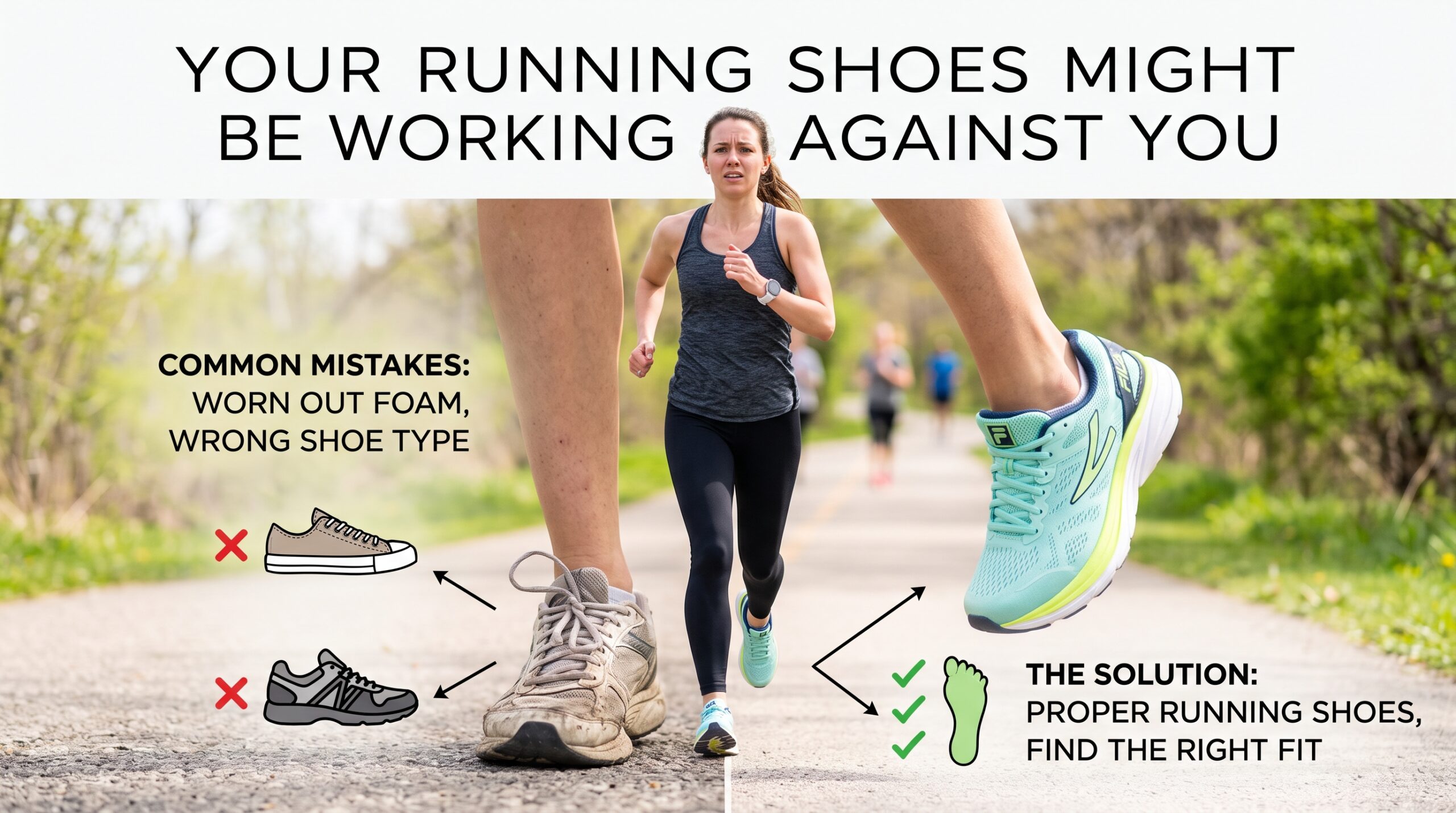
Spring race season brings a predictable wave of new runners, and a predictable wave of avoidable injuries. Most of them start at the shoe.
Every year around this time, the same thing happens. The weather turns, event registrations open, and a lot of people who have not run properly since summer decide this is the year they will. Within about six weeks, a meaningful number of them are dealing with shin pain, sore knees or an aching arch, and have quietly stopped.
Some of that is simply doing too much too soon. But a surprising amount traces back to footwear, and specifically to three mistakes that are easy to make and easy to avoid.
Mistake one: running in shoes that are not running shoes
Gym trainers, court shoes and casual sneakers are all built for different jobs. A cross-training shoe is designed to be stable during side-to-side movement, which means a flatter, firmer sole. A tennis shoe is reinforced for lateral loading and abrupt stops. Neither is built to absorb the repeated forward impact of running.
Running shoes are engineered around that single motion. The cushioning sits where the foot lands, the sole flexes where the foot rolls through, and the shape encourages forward movement rather than resisting it. Running any real distance in a shoe designed for something else means asking your joints to do the absorbing instead.
Mistake two: not knowing what your foot actually does
Feet roll inwards slightly on landing. That is normal and it is how the body dissipates impact. The variation is in how much.
If your foot rolls inwards significantly, a stability shoe with firmer support through the arch and midfoot will help control it. If it rolls very little, a neutral cushioned shoe is the better choice, and a stability shoe may actually work against your natural movement.
You can get a rough read at home. Wet the sole of your foot and step onto a dry surface. A print showing most of the foot, with a narrow band connecting heel and forefoot, suggests a fairly neutral arch. A near-complete footprint suggests a lower arch and more inward roll. Very little contact through the middle suggests a high arch. It is not a substitute for a gait assessment at a specialist store, but it will tell you which end of the spectrum you sit on before you spend anything.
For most recreational runners doing a few sessions a week, a lightweight neutral cushioned shoe is the sensible starting point. Ranges such as FILA’s women’s running shoes are built around this profile, with foam midsoles that absorb impact and breathable mesh uppers, which matters more than people expect once Australian temperatures start climbing.
Mistake three: running in shoes that are finished
Midsole foam compresses with use. The shoe can look perfectly fine while having lost most of the cushioning that made it worth buying. This is the failure people almost never spot, because there is no visible signal.
The general guidance is somewhere between 500 and 800 kilometres, though that varies with body weight, running surface and the shoe itself. For someone running three times a week, that is roughly six to twelve months.
A more practical test: press your thumb firmly into the midsole. New foam resists and springs back. Worn foam feels dead and compresses without recovering. If you are getting new aches in familiar routes and nothing else has changed, the shoes are the first thing to check.
A few things that matter less than people think
Weight is often oversold. A lighter shoe helps at race pace over shorter distances, but for most runners the difference is marginal, and very light shoes usually trade away the cushioning that keeps you comfortable over longer efforts.
Brand loyalty matters less than fit. Sizing and shape differ enough between manufacturers that the model which suited you last time may not this time. Judge each shoe on how it fits your foot, not on the name.
Trail shoes are for trails. Their aggressive tread and stiffer construction are wasted on footpaths, and they wear down faster on hard surfaces. If ninety per cent of your running is on road, buy a road shoe.
Getting the fit right
Try shoes on late in the day, when your feet have swollen slightly, which is closer to how they will be mid-run. Leave roughly a thumb’s width between your longest toe and the front of the shoe. Your heel should stay locked in place without slipping. And wear the socks you actually run in, because sock thickness genuinely changes the fit.
If a shoe needs breaking in, it does not fit. A running shoe should feel right in the shop.
The unglamorous conclusion
None of this is complicated, and none of it requires spending a lot. The runners who make it through to race day are usually not the ones with the most advanced footwear. They are the ones running in a shoe that suits their foot, that is designed for the surface they run on, and that has not quietly worn out without them noticing.